Why the Cypress Girl?
Cypress is a traditional Seminole last name.
It is also one of the most quietly magical trees in the Everglades.
I loved that immediately. The way a name could belong both to a people and a landscape, to lineage and ecology. It felt like the right anchor for this story.
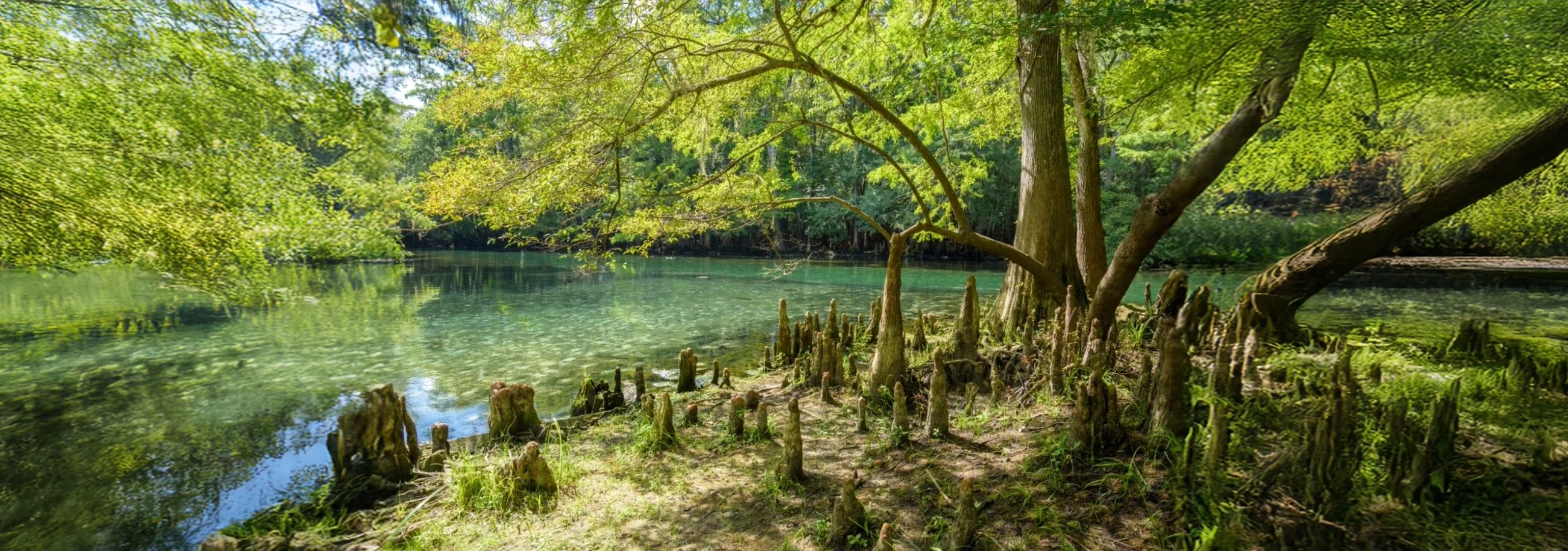
Cypress trees are ancient. Some live for a thousand years or more, standing in water that reflects the sky so perfectly it can feel unreal, like the world has doubled itself. Their massive trunks rise out of mirrored swamps, draped in moss, creating landscapes that feel untouched, timeless, and occasionally otherworldly.
Their roots are strange, too. Cypress “knees” push up out of the water like wooden stalagmites, part mystery, part engineering. This structure helps them survive storms, floods, and long seasons of saturation. They thrive where other trees would rot. They adapt. They endure.
They are also deciduous conifers, which means they lose their needles in winter. In a place known for relentless green, they go bare. Stark, dramatic, and quietly defiant.
And they are havens. Cypress domes shelter nesting birds, rare waders, entire ecosystems that depend on their presence. They are not ornamental. They are essential.
So Cypress became the last name of my main character.
Eleanora Cypress—Ellie.
Ellie is a teenage girl trying to figure out who she is in a world that’s shifting under her feet. Her father is Seminole. Her mother is white. She belongs to a community far enough south that survival has always mattered more than rigid social rules. Free Black families, Seminoles who refused relocation, Caribbean émigrés, and runaways live alongside one another because they have to. The land demands cooperation.
But that fragile peace is beginning to crack.
Developers are creeping south. Wealth and “civilization” are following them. The Everglades, long dismissed as a wasteland, are suddenly valuable. And the communities that have survived there through mutual care and shared risk are being threatened.
Ellie wants many things, some noble, some painfully human.
She wants Abraham—the son of freed slaves and her neighbor—to fall in love with her.
She wants to know what happened to her missing father and brother.
She wants to protect her family’s land from people who see it only as acreage.
She wants to prove that she belongs to the land. Not just that she lives on it.
She wants to feel pretty. And respected. And necessary.
She doesn’t know what to make of Luke Clay, a newcomer who plays the violin, tells pirate stories, and seems to know far too much about the wealthy men circling their town with contracts and quiet threats.
Each chapter of The Cypress Girl begins with an entry from Ellie’s nature journal: her observations of the land, the water, the animals, the subtle shifts that most people overlook. What she records becomes evidence, memory, and eventually resistance.
I tried, consciously, and probably not always successfully, to write Ellie Cypress as someone who belongs to the land rather than arrives to explain it. Her father is Seminole, her identity is mixed and unresolved, and she isn’t discovering magic so much as learning how much of it exists without her.
The mystery in The Cypress Girl lives in the place itself and in the histories layered into it, not in an outsider’s ability to define or redeem it. I wanted the land to hold its own meaning—older than the romance, sometimes indifferent to it—and for any sense of wonder to persist whether Ellie understands it fully or not. Whether that intention comes through on the page is something I’m still listening for.
Why I Love Ellie Cypress
I love her because she isn’t sure of herself. Who is at fifteen?
She’s rash and smart and earthy.
She notices beauty before she notices danger, but she learns.
She makes snap judgments, then has the humility to revise them.
She is self-deprecating, curious, stubborn, and deeply rooted.
Most of all, she carries the beginning of a resilience that echoes forward through every book in the series, across decades and generations, like the cypress trees themselves.
Ellie doesn’t yet know who she’ll become.
But the land does.
